

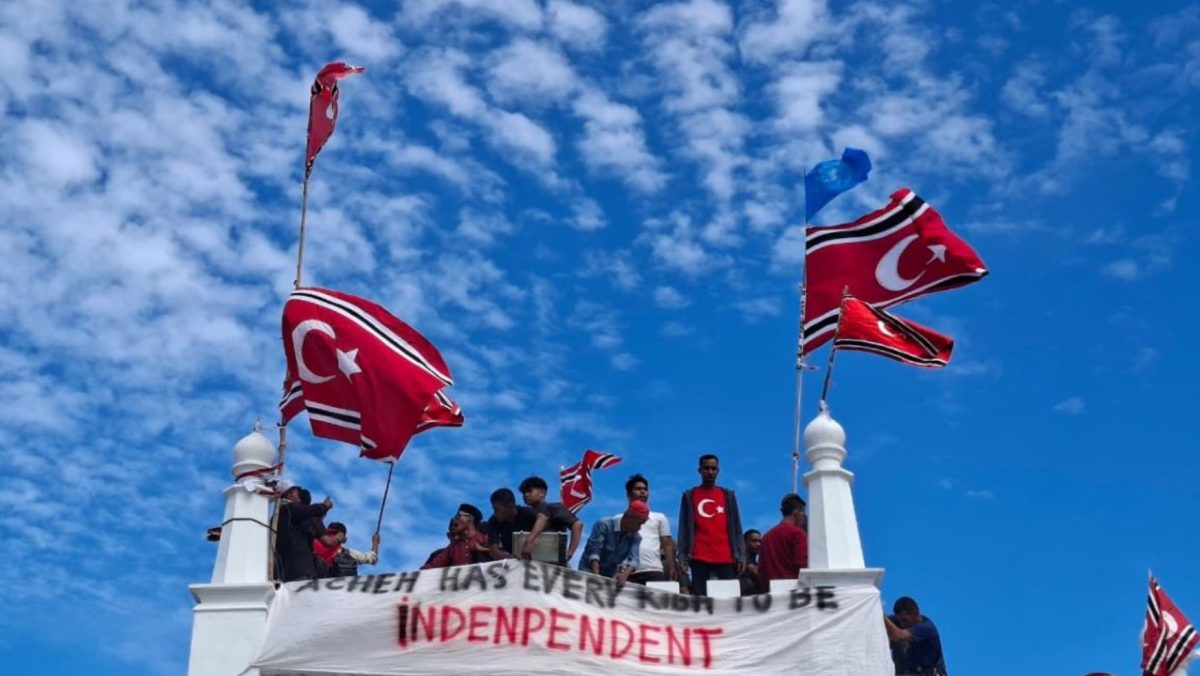
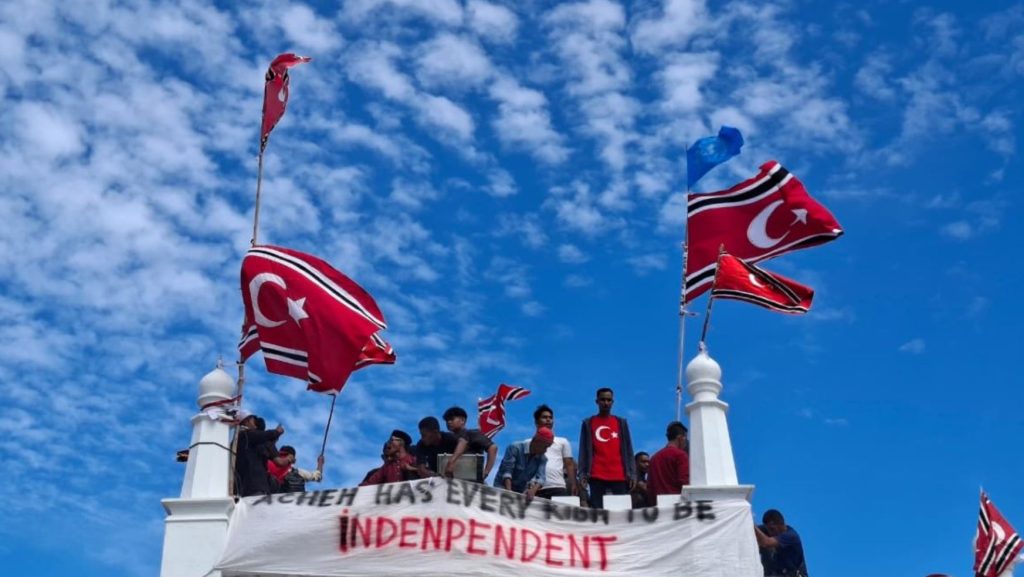
Banda Aceh News | A escalating controversy over the flying of the local Star and Crescent (Bintang Bulan) flag has reignited long-buried tensions between regional figures and security apparatus in Aceh. Addressing the ongoing military-led clampdowns and flag confiscations, prominent local leader Ibrahim Bin Abdul Jalil publicly affirmed that the symbol signifies Aceh’s constitutionally guaranteed autonomy, rather than a bid for secession or a “state within a state.”
Ibrahim, the Coordinator of the Aneuk Syuhada Network (JASA) in Southwest Aceh (Abdya), delivered a sharp rebuke against recent heavy-handed enforcement tactics. Aligning his stance with constitutional law expert and Coordinating Minister Prof. Yusril Ihza Mahendra, Ibrahim emphasized that the unique flag is a legally backed marker of the province’s special administrative status carved out during the historic 2005 peace accords.
“As a law graduate, I completely agree with Prof. Yusril Ihza Mahendra. The Bintang Bulan flag does not signal a state within a state, but rather serves as a symbol of Aceh’s unique autonomy and special rights that distinguish it from other regions,” Ibrahim stated during an official press briefing.
Historical Accords and Legal Foundations
The controversy traces its roots to the end of decades of armed conflict, formalized when the Indonesian government and the Free Aceh Movement (GAM) executed the Helsinki Memorandum of Understanding (MoU) on August 15, 2005. This peace framework was subsequently encoded into national law through Law No. 11 of 2006 on Aceh Governance (UUPA).
Building upon the federal legislation, the regional legislature enacted Aceh Qanun No. 3 of 2011 to formally regulate the provincial symbol. Ibrahim highlighted that the qanun’s deliberation in the Aceh Regional House of Representatives (DPRA) involved full participation from institutional leaders, including regional military commanders (Pangdam), provincial police chiefs (Kapolda), state prosecutors, and the Governor of Aceh.
“If there are differing views or ongoing disputes, all parties must defer to the legal provisions and the Helsinki MoU agreed upon by both sides. That agreement must be respected and executed consistently,” he insisted.
Scathing Critique of Military Overreach
The central point of friction stems from the active involvement of military personnel in forcibly removing the flags from public areas. Ibrahim argued that enforcement surrounding civil regulations strictly falls under civilian police jurisdiction, utilizing persuasive dialogue and community outreach rather than armed intervention.
Warning of dangerous escalations, the activist condemned reports of physical violence, severe beatings, and fatal shootings linked to recent enforcement operations, cautioning that military overreach threatens to unravel over two decades of hard-won peace.
“Cases of violence, severe assaults, and fatal shootings that claim the lives of Acehnese citizens do not just wound our peace—they constitute potential human rights violations,” Ibrahim asserted. “Actions like these reopen old traumatic wounds from our painful past.”
Concluding his address, Ibrahim warned that the local populace remains resolute in defending their historical rights against heavy-handed governance, cautioning against any actions that echo colonial-era subjugation.