

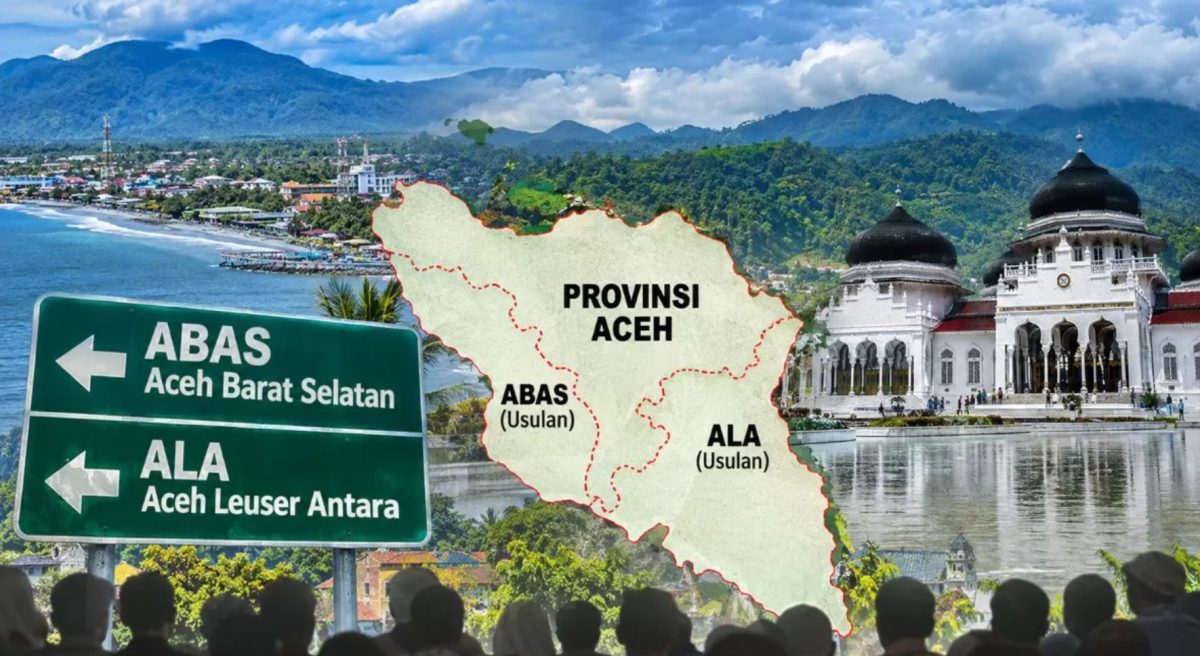
Banda Aceh News | BANDA ACEH — The longstanding political discourse surrounding regional autonomy and administrative subdivision in Indonesia’s northernmost province has resurfaced with renewed vigor. Throughout 2026, the protracted campaigns for the establishment of two proposed autonomous provinces—Aceh Barat Selatan (ABAS) for the West-South region and Aceh Leuser Antara (ALA) for the central and southeastern highlands—have returned to the forefront of regional politics, propelled once again by former local chief executives and veteran political actors.
Behind the recurring populist rhetoric promising equitable regional development, accelerated bureaucratic service delivery, and enhanced administrative oversight, profound structural questions persist. Analysts and regional stakeholders continue to interrogate the true driving forces behind these bifurcation initiatives, the internal governance of the advocacy organizations, and the underlying political calculations motivating the figures orchestrating the push from behind the scenes.
In the West-South territorial corridor, political momentum has coalesced around Ramli MS, a former two-term Regent of West Aceh. Ramli currently serves as the Chairman of the Lobbying Team for the Committee for the Formation of West-South Aceh Province (KP3 ABAS). Operating alongside KP3 ABAS General Chairman Kamaruddin, Ramli played a central role in a formal declaration rally held in Meulaboh on October 24, 2026.
The proposed ABAS administrative zone seeks to carve out six distinct regencies from the current jurisdiction of Aceh Province: West Aceh, Aceh Jaya, Nagan Raya, Southwest Aceh, South Aceh, and Simeulue Island. Proponents of the division have outlined five primary justifications for the split, ranging from closing regional infrastructure gaps and reducing bureaucratic friction in remote coastal districts to optimizing local natural resource management while ostensibly preserving Aceh’s special autonomy status within the Unitary State of the Republic of Indonesia (NKRI).
During the regional convention, Ramli asserted that approximately 120,000 local residents had endorsed the ABAS campaign. However, political observers note that such figures stem entirely from movement organizers and require rigorous independent verification regarding their geographical distribution and genuine demographic representation across the six target regencies.
Historical Roots and Central Highland Demands
Meanwhile, in the mountainous interior and southeastern territories, the push for the ALA province has been heavily spearheaded by former Southeast Aceh Regent Armen Desky. In April 2026, Armen publicly pressed the central government to lift the nationwide moratorium on regional expansions, citing persistent disparities in regional autonomy fund distribution (Dana Otsus) and structural inequities within the Aceh Health Insurance (JKA) system.
By August 2026, Armen leveraged broader national administrative discussions concerning the potential restructuring of up to 50 provinces nationwide to renew political pressure for the simultaneous establishment of both ALA and ABAS.
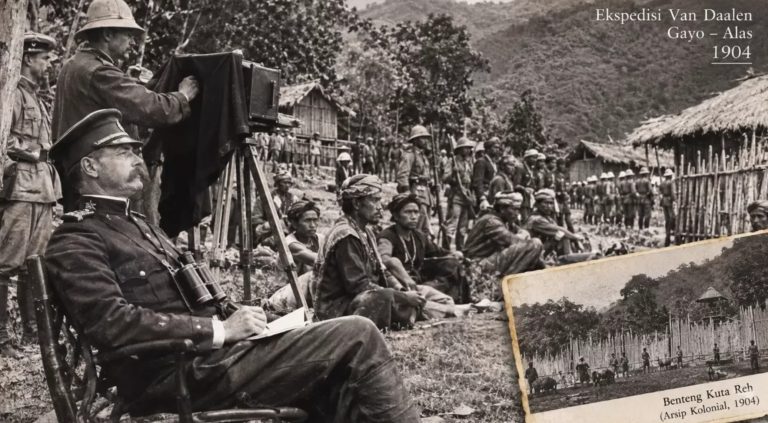
Nevertheless, the institutional lineage of the ALA campaign extends far beyond contemporary actors. Historical records compiled by movement chronicler Rahmat Salam indicate that the organizational embryo of KP3ALA dates back to November 1999, involving foundational figures such as Mustafa M. Tamy, Syahbuddin BP, Makmur Syahputra, and Professor Baihaqi AK. This early advocacy culminated in the pivotal Kutacane Congress in 2005, which was heavily facilitated by Armen Desky.
This deep historical trajectory demonstrates that the push for provincial subdivision is not a spontaneous grassroots phenomenon emerging in 2026, but rather a protracted institutional campaign backed by entrenched historical networks. Yet, the core political dilemma facing both movements centers on generational leadership renewal and popular democratic legitimacy.
The prominent reappearance of veteran political figures raises critical questions regarding whether these advocacy organizations have successfully fostered new leadership strata drawn from civil society, academic institutions, youth organizations, and productive economic sectors. While the extensive governmental experience of former officials provides tactical organizational knowledge, past political tenure does not automatically equate to uncritical public consensus for structural division.
Elite Power Distribution vs. Popular Benefit
Concurrently, the creation of new provincial entities opens vast institutional real estate, including new gubernatorial seats, regional legislative (DPRD) positions, expanded civil service bureaucracies, and restructured regional budgets. Consequently, transparency regarding internal organizational structures, movement financing, decision-making protocols, and genuine public consultation remains paramount.
Complicating matters further is the rigid stance of the central government. In April 2025, House of Representatives (DPR) Commission II explicitly stated that the formation of new autonomous regions remains stalled pending the finalization of two critical government regulations concerning regional arrangement and civil administration. Consequently, high-profile declarations and political lobbying in Jakarta do not immediately translate into formal legislative approval.
Amid ongoing legislative debates concerning revisions to the Law on the Governance of Aceh (UUPA) and heightened public demands for the full implementation of the Helsinki Peace MoU, civil society groups across Aceh are increasingly urging proponents to clarify how ABAS and ALA intend to safeguard Aceh’s hard-won special autonomy framework if administrative subdivision materializes.
Regional analysts emphasize that establishing a new province extends far beyond constructing executive offices or expanding regional capitals; it directly impacts jurisdictional authority, fiscal budgeting, institutional integrity, and the overarching political future of Aceh.
Ultimately, as regional elites ramp up their political maneuvering in Jakarta, the most pressing question confronting the architects of ABAS and ALA is not merely when the new provinces will be formally inaugurated, but rather who reaps the political and economic rewards, who bears the administrative costs, and how ordinary citizens can ensure that regional autonomy does not devolve into an elite-driven contest for institutional patronage.