

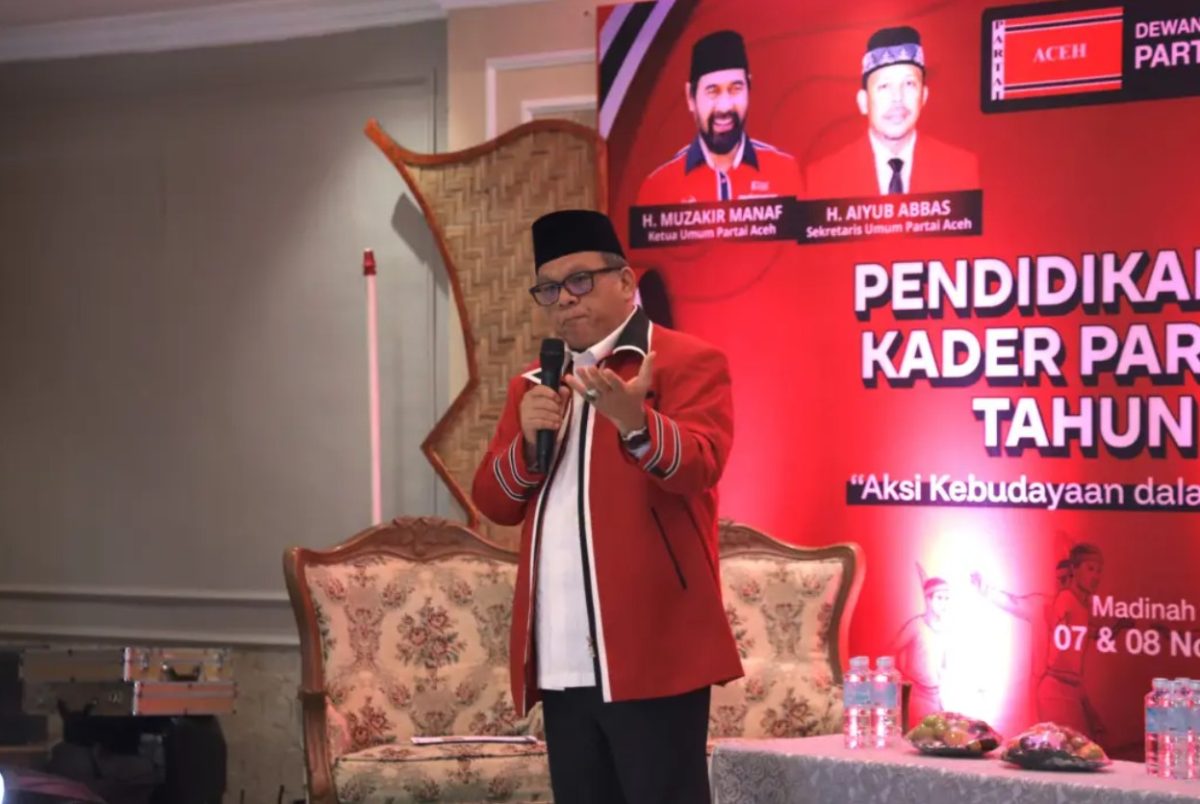
Banda Aceh News | BANDA ACEH — In a profound cultural intervention amidst contemporary political dynamics, the Arts and Culture Department of the Aceh Party (Partai Aceh / PA) convened a major national seminar to revitalize seudati—traditional Acehnese dance and verse—and re-anchor regional policy in indigenous wisdom. The high-profile event was held on Saturday, November 7, 2026, at the Madinah Hotel in Banda Aceh.
The academic and cultural forum gathered an elite panel of artists, senior researchers, and cultural preservationists, featuring ethnic artist and Acehnese cultural figure Imam Juaini, M.A.; master seudati and rapai geleng practitioner Sheikh Abu Tarimin from the Citka Geunta cultural troupe; Dr. Sehat Ihsan Sadiqin, senior researcher from the International Centre for Aceh and Indian Ocean Studies (ICAIOS); and pop culturalist and filmmaker Davi Abdullah.
Opening the seminar, Ir. Jufri Hasanuddin, M.M., Deputy Chairman I for Political Education and Cadre Development of the PA Central Leadership Board (DPP), underscored that Acehnese culture, customs, and traditional arts such as seudati are fundamentally inseparable from the religious ethos of the Acehnese people.
“Acehnese custom and Islamic sharia are like substance and attribute (zat ngon sifeut); if one is corrupted, total ruin follows. When customs are practiced, there are inherent sharia values within them; what endures is culture that aligns with divine law,” explained Jufri, who formerly served as Regent of Southwest Aceh (Abdya).
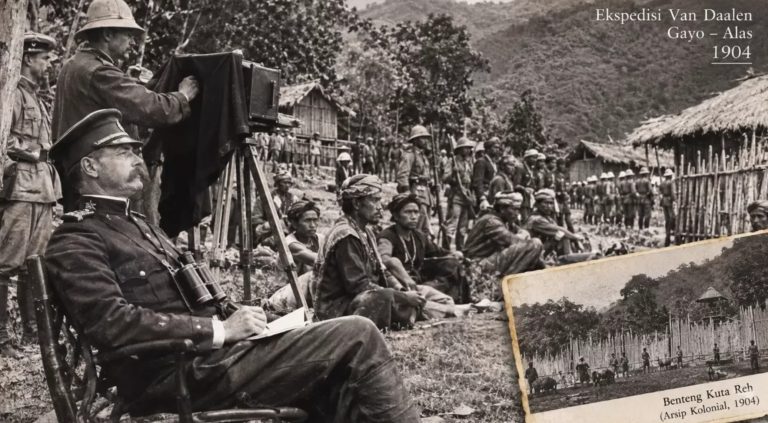
Jufri noted that seudati originated as a vehicle for Islamic proselytization (dakwah) before transforming into a martial art form embodying the fierce anti-colonial resistance against Dutch occupation. Due to its powerful anti-colonial verses and mobilization capacity, colonial authorities frequently banned seudati competitions (tunang seudati).
Historical Roots and Sufi Breathing
Syamsul Bahri—widely known as Ayi Sarjev, Deputy Chairman for Culture of Partai Aceh and chairman of the organizing committee—noted that organized cultural resistance movements have deep historical roots in Aceh dating back to the 16th century, characterized by iconic figures such as Teungku Chik Pante Kulu, creator of the legendary Hikayat Prang Sabi.
“Seudati once formed an integral pillar of the Acehnese people’s struggle against the Dutch. Before engaging in battle, communities held seudati tournaments to stoke patriotic fervor. Tragically, seudati maestros are now rare, prompting this cultural action. Partai Aceh opens its doors to anyone seeking to advance Acehnese culture, striving to serve as a locomotive for cultural preservation,” Sarjev asserted.
Expounding on its spiritual dimensions, Imam Juaini explained that the tradition evolved directly from rateb and zikir (chanting sessions). The aesthetic evolution of seudati—from bare-chested performances to black attire, and eventually to pristine white costumes embedded with Islamic verse—reflects deep spiritual integration.
“Within seudati verses, one finds untranslatable phrases containing fragments of Sufi mystical terminology. Over time, heroic verses were integrated, transforming seudati into a formidable pillar of Acehnese identity,” Juaini elaborated.
Echoing this perspective, Dr. Sehat Ihsan Sadiqin of ICAIOS defined seudati not merely as a dance, but as a rhythmic manifestation of physical and spiritual endurance requiring exceptional stamina, noting that the breath of Sufi tariqa orders pulses through its rhythmic cadence.
From Ritual Chants to Global Stages—and the Risk of Commercialization
Filmmaker Davi Abdullah traced the trajectory of seudati from its origins in religious invocations and rhythmic group prayers into an athletic, martial performance art.
“The poetry and movements of seudati ignite patriotism, which is precisely why the Dutch colonial regime banned it. After the Dutch departed, seudati experienced a massive popular resurgence, giving rise to legendary maestros and culminating in its golden era of international performance tours throughout the 1990s,” Davi detailed.
However, Davi also cautioned against historical blind spots, noting that during periods of social upheaval in Aceh, ideological friction occasionally flared between religious scholars and traditional artists over provocative lyrical content.
“Today, seudati has unfortunately shifted from an authentic ritual art form into a stage performance, and in many cases, is reduced to mere decorative entertainment for ceremonial functions,” he concluded.
Through this comprehensive cultural seminar, Partai Aceh aims to bridge the ideological gap between contemporary political strategy and indigenous heritage preservation—ensuring that the revolutionary spirit embedded within Acehnese art continues to inspire future generations.